
Backstage #1

Backstage#1 stems from a shared interest between Cecilia Bonilla and Chino Soria in an experimental space for rehearsing, testing, and playing without the pressure of a final showcase. It represents a conversational process between the two artists and curator Adela Blanco working together on a project rooted more in dialogue than in traditional exhibition standards.
The initiative marks the opening of Bonilla’s new London studio, creating a living space where ideas flow. Outside the formal setting of the gallery, the installation process itself activates the studio as a dynamic environment where trial, error, and the tension between materials and practices evolve as a collaborative and direct experience.
Visit us at:
ACME, 15 Orsman Rd. N1 5RA
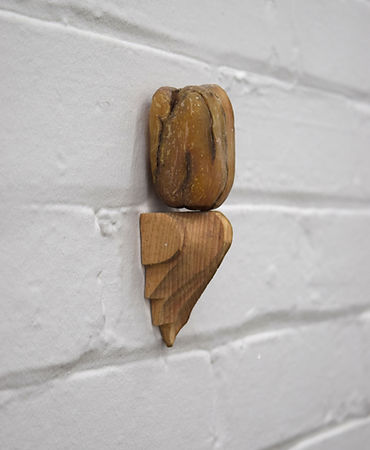
Cecilia Bonilla

Photography by Betty Saunders
Cecilia Bonilla is a UK-based Uruguayan artist working predominantly with assemblage, installation, and collage.Bonilla works primarily with images and objects that already exist in the world, subtly combining them to subvert their original meanings—reconfiguring, perverting, and dismantling the source material. In her assemblages and installations, she arranges materials into ephemeral, often precarious displays.
Resisting spectacle, her practice is rooted in appropriation and quiet disruption.Across her work, the fragility of our connection to nature, along with themes of domesticity, “ideals of beauty,” “lifestyle,” and other social constructs, are questioned corrupted and undermined through minimal yet skillful assemblage and modification.Bonilla grew up as a political refugee in Sweden during the 1980s, an experience that continues to inform her sensitivity to context and representation. She has lived and worked in the UK since 1999 and is currently based between Margate and London.
Chino Soria

Photography by Vicky Polak
Chino Soria (Buenos Aires, 1964). His practice spans multiple media, from deceptively simple forms such as painting and drawing to others firmly rooted in the methodologies of collage, assemblage, and processes drawn from craft, jewelry, design, and architectural modeling. This seemingly outlandish act of combining the casual and the discarded with the intentional allows him to investigate the relationship between the material environment and the systems of capitalist consumption that shape it.
Yet at the center of this composition lies a reflection on the contradictory human desire for material possession and for beauty. His is a practice, perhaps close to poetry, in which art functions as an essential and ancestral disruption of the rational: a space where the transformation of being can occur through the epiphanic. Just as dreams offer hope and respite from the demands of wakefulness, art — and in this sense, the work of Chino Soria — offers an equally playful and vital release from the overly rational and normalized dynamics of existence.




Words and studio photos by Adela Blanco